
TL;DR: Maximize a small living room by prioritizing vertical storage and selecting furniture with exposed legs to maintain sightlines. Use light colors and oversized mirrors to create the illusion of depth while choosing multifunctional pieces that serve dual purposes without adding clutter.
Introduction
Living in a compact urban apartment often feels like a constant negotiation with your own belongings. You want a home that feels sophisticated and welcoming, yet the physical constraints of four close walls can make the space feel restrictive. Successful design in small quarters is less about what you can fit and more about how you direct the eye to move through the room. By applying a few professional spatial tricks, you can turn a cramped footprint into a functional sanctuary that breathes.
Optical Illusions and Visual Weight
The concept of visual weight determines how heavy or crowded a room feels to the human brain. Large, bulky furniture that sits directly on the floor blocks the view of the baseboards, which signals to your mind that the room ends exactly where the fabric begins. This immediate visual cutoff makes any area feel significantly smaller than its actual dimensions. Choosing pieces that sit high on tapered legs allows light and air to pass underneath, extending the perceived floor area.
When you can see the floor extending under a sofa or an armchair, your brain registers the entire square footage of the room rather than just the walking paths. This small change creates a sense of openness that traditional, floor-skimming furniture cannot provide. Mid-century modern styles often work exceptionally well in apartments because their slender profiles provide comfort without the physical bulk of traditional overstuffed upholstery.
Furniture with Lifted Profiles
Selecting a sofa with slender wooden or metal legs is one of the most effective ways to open up a floor plan. This approach works because it maintains a continuous line of sight across the hardwood or carpet. A heavy, skirted sofa acts like a wall, while a legged piece acts like a bridge. You want your furniture to feel as though it is floating rather than anchored heavily to the ground.
Consider how a low-profile coffee table with a thin frame changes the dynamic of a seating cluster. If the table has a solid base, it becomes a visual dead zone in the center of the room. A spindly frame or a wire-base design keeps the center of the room looking light and airy. This tactic is particularly useful in studio apartments where the living room must also serve as a walkway or a transitional zone.
The Power of Translucent Materials
Acrylic and glass furniture pieces serve a unique purpose by providing utility without taking up any visual real estate. An acrylic “ghost” chair or a glass-topped dining table provides a place to sit or eat while remaining virtually invisible to the eye. These materials allow the colors and patterns of your walls and rugs to show through, which prevents the room from looking chopped into small segments.
I once worked with a client in a 350 square foot studio where every piece of furniture was made of dark, heavy oak. The space felt like a cave until we swapped the solid wooden desk for a clear tempered glass console. Suddenly, the wall behind the desk was visible again, and the entire corner felt three feet wider. Using clear materials is a secret weapon for those who need functionality but hate the look of a crowded room.
Wall Space and Vertical Real Estate
Most apartment dwellers forget that their square footage includes the vertical height of the walls, not just the horizontal floor space. When floor space is at a premium, you must look upward to find your storage and decorative opportunities. Drawing the eye toward the ceiling makes a room feel taller, which compensates for a narrow width. This technique changes the perspective of the guest from looking at the floor to appreciating the volume of the entire room.
Installing shelving that reaches all the way to the ceiling forces the gaze upward and provides a massive amount of storage. This also creates a focal point that feels grand and intentional rather than cluttered. When you use the full height of a wall, you can often eliminate the need for extra chests or cabinets that would otherwise eat into your walking space.
High Mounted Window Treatments
A common mistake in small apartments involves hanging curtain rods directly above the window frame. This placement chops the wall in half and makes the ceiling feel much lower than it actually is. By mounting the rod just a few inches below the ceiling and letting the fabric hit the floor, you create long vertical lines. These lines trick the mind into thinking the windows are much larger and the ceilings are much higher.
This method works best when you use lightweight, sheer fabrics that allow natural light to filter through while maintaining privacy. Heavier drapes can work if they match the wall color closely, creating a continuous surface that does not break up the visual flow. Long, flowing curtains add a layer of softness to the room that balances out the hard edges of furniture and walls.
Floating Storage Solutions
Wall-mounted or floating furniture is a game changer for small living rooms because it leaves the floor entirely clear. A floating media console or a wall-mounted desk provides the same surface area as a traditional piece without the footprint. This design choice keeps the room looking organized and makes cleaning the floors much easier. When the floor remains visible from wall to wall, the room feels significantly more expansive.
Floating shelves also allow you to display books and art without the need for a bulky bookcase. You can stagger them to create a dynamic visual arrangement or align them for a clean, minimalist look. By keeping your surfaces clear and moving your items to the walls, you reclaim the floor for movement and relaxation. This is especially vital in high-traffic areas where every inch of walkway counts.
Mirror Strategy and Light Management
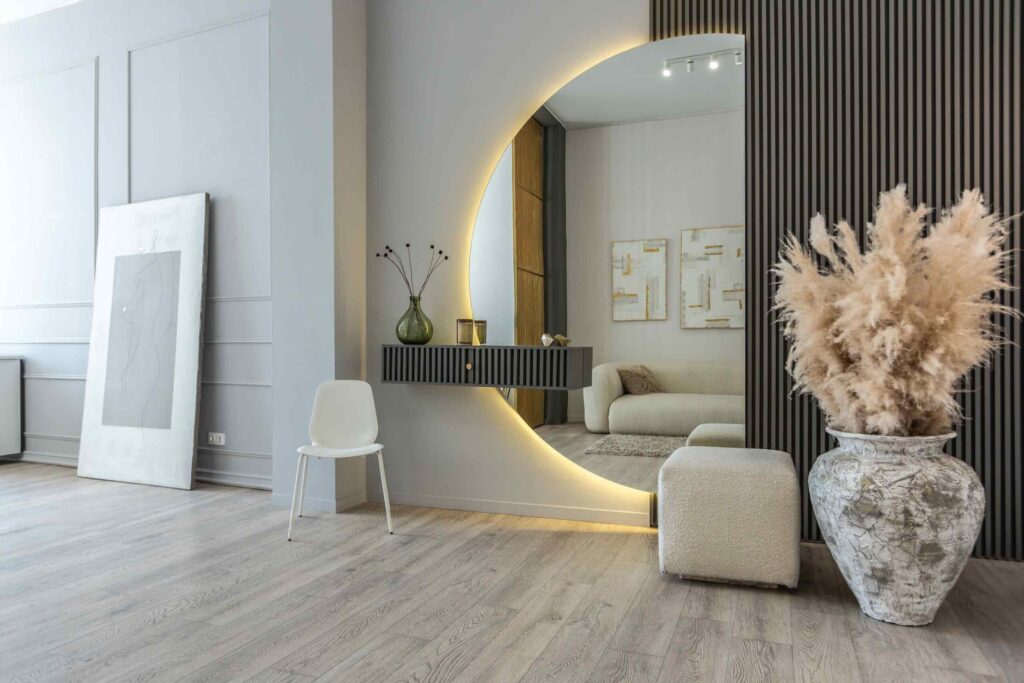
Mirrors are effectively windows that you can place anywhere to create depth and reflect light. A well-placed mirror can double the visual size of a living room by reflecting the opposite side of the space. This is not just a cliché of interior design; it is a fundamental rule of optics that works in every setting. The key is to choose a mirror that is large enough to make a real impact rather than a small, decorative one.
In addition to expanding the view, mirrors help distribute light into the darker corners of an apartment. Natural light is a precious commodity in many urban rentals, and a mirror placed opposite a window will bounce that light throughout the day. This reduces the need for artificial lighting during the afternoon and makes the space feel more alive and connected to the outside world.
Reflective Surfaces as Windows
Positioning a large floor mirror behind a sofa or a dining table creates a sense of “beyond” that prevents the walls from feeling like boundaries. If you can lean a tall, framed mirror against a focal wall, it acts as an architectural feature that adds elegance. The reflection creates a second layer of the room, giving the eye a place to travel beyond the physical limits of the drywall.
Another effective tactic is to use mirrored furniture, such as a side table or a bar cart. These items reflect the rug and the surrounding colors, helping them blend into the environment. While a solid black side table creates a harsh silhouette, a mirrored one practically disappears while still holding your coffee or a lamp. It is a subtle way to incorporate more light without overwhelming the decor.
Layered Ambient and Task Lighting
Lighting often determines how we perceive the boundaries of a room. A single overhead light tends to cast harsh shadows that make the corners of a room disappear, effectively shrinking the space. Instead, use a variety of light sources at different heights to create a sense of depth and warmth. Floor lamps, table lamps, and wall sconces work together to highlight different areas and make the room feel larger.
Wall-mounted swing-arm lamps are particularly useful in apartments because they do not require any table or floor space. You can position them over a sofa for reading or point them toward a piece of art to create a focal point. By illuminating the corners and the walls, you define the full extent of the room. Good lighting makes a small space feel cozy and curated rather than dark and neglected.
Smart Furniture Selection and Scaling
The scale of your furniture is perhaps the most important factor in whether a living room feels balanced or overwhelmed. Many people assume that a small room requires many small pieces of furniture, but this actually leads to a cluttered, “dollhouse” effect. One or two larger, well-scaled pieces often make a room feel more substantial and less chaotic than a collection of tiny chairs and tables.
It is a matter of finding the right proportions for the specific dimensions of your walls. A sofa that is too long will cramp the walkways, but a sofa that is too short might look lost. Measuring your space and using painter’s tape on the floor to visualize the footprint of new furniture before you buy it can save you from costly mistakes.
Choosing the Right Proportion
When selecting a sofa, look for designs with narrow arms to maximize the seating area without increasing the overall width. A bulky, rolled-arm sofa can take up an extra foot of space that provides no actual utility. By choosing a streamlined, modern silhouette, you get more room to sit while occupying less of the room’s physical volume. This precision in selection is what separates a professional layout from a haphazard one.
In some cases, a small sectional can actually be more efficient than a sofa and an armchair combination. A sectional fits neatly into a corner and provides a continuous seating surface that leaves the center of the room open. This eliminates the “dead space” that often exists between separate pieces of furniture. It creates a cozy nook that feels like a destination within the larger room.
Multifunctional Statement Pieces
In an apartment, every item should ideally serve more than one purpose. An ottoman that doubles as a coffee table and extra seating is a classic example of smart apartment living. You can use it to rest your feet, place a tray on top for drinks, or pull it over when you have guests. This flexibility means you need fewer total items in the room, which reduces visual noise and physical clutter.
Consider a storage trunk that serves as a coffee table. It provides a sturdy surface for daily use while hiding away seasonal blankets, board games, or extra pillows. By concealing the clutter inside a functional piece of furniture, you keep the room looking tidy and organized. This dual-purpose approach is essential for maintaining a high-functioning home in a limited space.
Zoning and Spatial Definition
Open-plan apartments can often feel like one big, disorganized room where nothing has a specific place. Creating distinct zones for lounging, dining, and working helps the brain process the space as a series of functional areas. This makes even a small studio feel like a multi-room home. You do not need physical walls to create these boundaries; you can use visual cues to define each section.
Zoning is about creating a sense of order. When each activity has its own dedicated spot, you are less likely to let items from one area drift into another. This organization is key to preventing the “cramped” feeling that comes from living in a single, undifferentiated space. It allows you to mentally transition from work mode to relaxation mode even if you are only moving three feet away.
Defining Boundaries with Area Rugs
An area rug is the most effective tool for grounding a furniture grouping and defining a specific zone. In a living room, the rug should be large enough so that at least the front legs of all the seating pieces sit on top of it. This creates a cohesive “island” that tells the eye where the living area begins and ends. A rug that is too small looks like a floating postage stamp and actually makes the room feel disconnected.
Using different rugs to separate a dining area from a living area provides a clear visual break without the need for bulky dividers. Choose rugs with textures that complement each other but have distinct patterns or colors to reinforce the separation. This layering adds warmth and comfort to the room while serving a very practical architectural purpose.
Flexible Room Separators
If you need more privacy or a clearer divide, consider using open shelving or a folding screen. An open bookshelf allows light to pass through while creating a physical barrier between a bed and a sofa. This provides storage and separation simultaneously, making it a highly efficient choice for studio dwellers. Unlike a solid wall, an open shelf keeps the room feeling connected and airy.
Folding screens or even hanging fabric panels can be used to hide a workspace at the end of the day. Being able to “close the door” on your desk, even if that door is just a beautiful piece of fabric, helps you relax in your living space. These flexible solutions can be moved or tucked away as your needs change, offering a versatility that permanent structures lack.
Color Schemes and Art
The colors you choose for your walls and furniture have a profound impact on how the room feels. While deep, dark colors can be cozy, they tend to absorb light and pull the walls inward. Lighter, neutral tones reflect light and make the boundaries of the room feel more distant. This does not mean you are limited to white; soft grays, pale blues, and warm beiges all work beautifully to expand a space.
Texture is just as important as color when you are working with a limited palette. Mixing different materials like linen, velvet, wood, and metal adds depth and interest without the need for busy patterns. A monochromatic room that uses various textures feels sophisticated and calm rather than flat and boring.
Low Contrast Color Palettes
Painting your walls, baseboards, and even your bookshelves the same color creates a seamless look that minimizes visual breaks. When the trim matches the walls, the eye does not stop at every corner or doorway, which makes the room feel like one continuous surface. This low-contrast approach is a favorite among designers for making small rooms feel grand and expansive.
You can carry this principle into your furniture selection by choosing pieces that are a similar shade to your walls. A light gray sofa against a light gray wall seems to take up less space than a dark navy sofa would. This allows the furniture to blend into the background, keeping the focus on the overall atmosphere of the room rather than individual bulky items.
Large Scale Wall Decor
It might seem counterintuitive, but one large piece of art often looks much better in a small room than a collection of tiny ones. A gallery wall with many small frames can look cluttered and busy, breaking up the wall into many small segments. A single, oversized canvas or framed print creates a bold focal point and gives the room a sense of scale.
Choose art that has a sense of perspective, such as a landscape or an abstract piece with a lot of white space. This adds a “window” to the wall and draws the eye inward. By giving the room one strong visual element to focus on, you create a sense of intentionality and high-end design that makes the small square footage feel like a deliberate choice.
Wrap Up
Maximizing an apartment living room requires a shift in perspective from filling floor space to managing visual flow. By prioritizing furniture with legs, utilizing your vertical real estate, and employing mirrors and light, you can create a home that feels spacious and serene. Remember that the best designs are those that allow for movement and breathe, proving that you do not need a massive house to live with style and comfort. Focus on quality over quantity and let your personal taste shine through in every carefully selected piece.
FAQs Section
What is the best type of sofa for a small apartment?
Choose a sofa with a slim profile and exposed legs to maintain an open line of sight across the floor. Models with narrow arms provide maximum seating without adding unnecessary width to the footprint.
How do I make my small living room look bigger with mirrors?
Place a large mirror opposite a window to reflect natural light and create a sense of depth that mimics an extra window. Leaning a tall floor mirror against a wall can also make the ceiling feel higher and the room wider.
`Are dark colors a bad idea for a small living room?
Dark colors can work if you use them on all surfaces to create a cozy, “jewel-box” effect, but light colors are generally better for reflecting light and making a space feel airy. If you love dark tones, consider using them as accents in pillows or rugs rather than on the walls.




Leave a Reply