
AI Chrome Extensions That Reshape How Developers Write Code

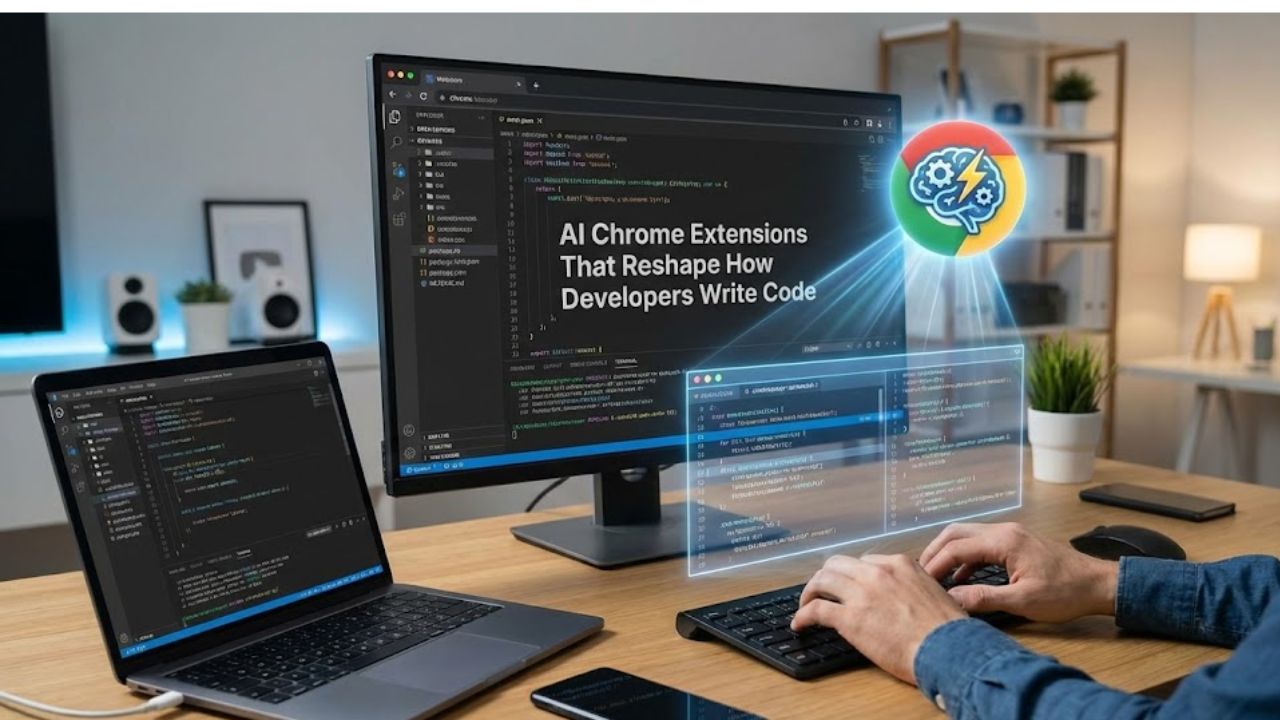
Coding inside a browser sounds limiting until deadlines hit and context switching drains focus. Many developers feel friction when jumping between documentation editors and terminals. AI Chrome extensions for coding grew from that frustration. They sit where work already happens and remove small delays that compound into lost hours.
The appeal is not novelty. It is speed paired with judgment. These tools assist without forcing a new environment. When implemented well they behave like a calm senior engineer reading over your shoulder. That dynamic explains why browser based AI coding tools now influence professional workflows across startups agencies and enterprise teams.
Search intent around this topic centers on trust. Developers want to know which extensions actually help and why some fail. They want clarity around data privacy performance cost and real limitations. Shallow lists do not answer those questions. What follows is a field tested editorial view shaped by long term use and evaluation.
Why Browser Based AI Tools Matter in Modern Coding
Coding Happens Where Context Lives
Developers spend large portions of their day inside browsers. Documentation issue trackers pull requests design specs and internal dashboards live there. AI Chrome extensions for coding tap into that reality. They observe code snippets error messages and API references without demanding copy paste rituals.
Context preservation matters. When an AI tool sees the surrounding page it can infer intent. That reduces hallucinations and generic output. Practical coding assistance depends less on raw model power and more on how well context is framed. Browser extensions excel at that framing.
Experienced engineers notice a shift in mental load. Fewer tabs open fewer interruptions. That change improves accuracy more than speed alone. Code quality improves when attention stays anchored.
Latency and Feedback Loops Shape Adoption
Terminal based AI tools feel powerful yet slow in conversational feedback. Browser extensions shorten that loop. Suggestions appear inline. Explanations appear beside errors. That immediacy changes behavior.
Fast feedback encourages experimentation. Developers try alternative approaches without committing to them. This mirrors how senior engineers think through problems. The browser becomes a sketchpad rather than a rigid interface.
Latency also affects trust. When suggestions arrive late they get ignored. Chrome extensions succeed when they feel anticipatory rather than reactive.
Trust Hinges on Restraint
The best AI Chrome extensions for coding know when to stay quiet. Overactive suggestions erode confidence. Skilled developers value tools that intervene only when useful.
Restraint signals maturity. It shows that designers understand real workflows rather than demo scenarios. Extensions that respect user intent gain long term adoption.
Core Categories of AI Chrome Extensions for Coding
Inline Code Assistance Extensions
These tools offer suggestions within text editors embedded in browsers. Examples include online IDEs documentation editors and code review interfaces. Their strength lies in micro suggestions like syntax fixes edge case reminders and pattern alignment.
Such extensions rely heavily on language models tuned for code. Integration quality matters more than model size. Poor placement of suggestions disrupts flow.
When done well these tools reduce trivial errors. That frees cognitive energy for architectural decisions. Developers often report fewer lint issues and cleaner diffs.
Documentation and API Understanding Tools
Reading documentation consumes time and mental bandwidth. AI extensions that summarize API behavior explain parameters and surface examples change that equation.
These tools shine when handling poorly structured docs. They extract intent and constraints that raw text obscures. That capability helps junior developers ramp faster and helps seniors validate assumptions quickly.
Context awareness again plays a role. Extensions that read the current page provide targeted explanations rather than generic summaries.
Debugging and Error Interpretation Tools
Error messages frustrate because they lack context. AI Chrome extensions for coding can parse stack traces browser console errors and build logs then translate them into actionable insight.
Value emerges when explanations tie back to the actual code snippet in view. Generic debugging advice fails experienced developers. Specific hypotheses succeed.
Teams using these tools report faster issue resolution and fewer back and forth cycles during reviews.
Code Review and Quality Analysis Extensions
Reviewing code inside platforms like GitHub lives in the browser. AI extensions augment that process by flagging logical gaps security concerns and style inconsistencies.
Effective tools respect project conventions. They learn from repository context rather than enforcing abstract rules. That adaptability differentiates useful review assistance from noise.
Experienced reviewers treat AI as a second pass rather than an authority. That balance maintains accountability.
Real World Tools Shaping the Space
GitHub Copilot in Browser Contexts
While often associated with editors Copilot also influences browser based workflows through integrations. Its strength lies in pattern recognition across vast codebases.
In browser contexts Copilot assists during code reviews and documentation edits. It surfaces familiar patterns and warns when deviations appear risky. That mirrors how seasoned maintainers think.
Limitations appear around proprietary logic and niche frameworks. Copilot performs best in mainstream stacks. Teams must calibrate expectations accordingly.
OpenAI Powered Extensions
Extensions leveraging OpenAI models offer conversational depth. They explain reasoning and tradeoffs rather than just outputting code.
This suits learning and architectural discussions. Developers can challenge suggestions and refine prompts within the same page.
The risk lies in overreliance. Models explain confidently even when wrong. Experienced users cross check outputs against source material.
Google Chrome Ecosystem Advantages
The Chrome extension ecosystem benefits from stable APIs and deep browser integration. Performance overhead remains low when extensions follow best practices.
Security review processes in the Chrome Web Store add a layer of trust. That matters when extensions access code and credentials.
Developers still must audit permissions. Least privilege remains a guiding principle.
Practical Comparison of Leading AI Chrome Extensions for Coding
The following table reflects observed behavior across common scenarios. It avoids marketing claims and focuses on operational traits.
+———————-+———————–+———————-+———————-+———————-+
| Extension Focus | Primary Use Case | Context Awareness | Learning Curve | Reliability |
+———————-+———————–+———————-+———————-+———————-+
| Inline Assistance | Syntax and patterns | High | Low | Consistent |
+———————-+———————–+———————-+———————-+———————-+
| Documentation AI | API understanding | Medium | Low | Variable |
+———————-+———————–+———————-+———————-+———————-+
| Debugging AI | Error resolution | High | Medium | Scenario dependent |
+———————-+———————–+———————-+———————-+———————-+
| Code Review AI | Quality checks | High | Medium | Strong with context |
+———————-+———————–+———————-+———————-+———————-+
| Conversational AI | Design discussion | Medium | Low | Model dependent |
+———————-+———————–+———————-+———————-+———————-+
Security Privacy and Performance Considerations
Data Exposure Realities
AI Chrome extensions for coding often transmit code snippets to external servers. That raises legitimate concerns around intellectual property.
Responsible tools anonymize data and offer opt out controls. Teams handling sensitive code should review policies carefully.
Practical experience shows that blanket bans often fail. Selective approval with guidelines works better.
Performance Impact on Large Projects
Poorly optimized extensions slow page rendering and editor responsiveness. That cost compounds during long sessions.
Well built tools throttle requests and cache results. Users should monitor browser performance metrics after installation.
Disabling unused features reduces overhead. Mature extensions allow granular control.
Compliance and Team Governance
Organizations must align extension usage with compliance frameworks. Audit logs and access controls matter.
Some vendors offer enterprise modes with stricter data handling. That option suits regulated industries.
Individual developers still bear responsibility for understanding tool behavior.
How Experienced Developers Integrate These Tools
Treating AI as a Junior Collaborator
Veteran engineers frame AI suggestions as starting points. They review logic and edge cases with skepticism.
This mindset prevents complacency. It mirrors mentorship dynamics where guidance accelerates learning but final decisions remain human.
Extensions that support iterative refinement fit this approach best.
Building Muscle Memory Around Prompts
Effective use depends on how questions are framed. Experienced users develop concise prompts tailored to context.
Browser extensions reduce friction in that process. Prompting becomes conversational rather than formal.
Over time this builds intuition about model strengths and blind spots.
Avoiding Context Collapse
Switching between tasks confuses AI tools. Clear boundaries help.
Experienced developers close irrelevant tabs and focus pages before invoking assistance. That discipline improves output quality.
Future Direction of AI Chrome Extensions for Coding
Deeper Semantic Awareness
Next generation tools will infer project intent across repositories. They will understand business logic not just syntax.
Browser based context will play a role by linking tickets docs and code changes.
This evolution favors extensions that already integrate broadly.
Local Model Integration
Privacy concerns drive interest in local inference. Browser extensions may soon leverage on device models.
Performance tradeoffs remain yet progress accelerates. Hybrid approaches appear likely.
Developers should watch this space closely.
Workflow Native Design
Extensions will fade into the background. Assistance will feel native rather than bolted on.
That shift requires restraint and deep user research. Noise will lose users quickly.
FAQs
Do AI Chrome extensions replace IDE based tools
They complement rather than replace. Browser tools excel at context awareness across docs and reviews. IDE tools retain advantages in deep refactoring.
Are these extensions safe for proprietary code
Safety depends on vendor policy and configuration. Reviewing permissions and data handling terms remains essential.
Can junior developers rely on these tools for learning
They help accelerate understanding when paired with critical thinking. Blind trust leads to shallow learning.
Do these tools slow down the browser
Well optimized extensions have minimal impact. Poorly built ones degrade performance. Monitoring matters.
How do teams standardize usage
Clear guidelines and approved tool lists work better than bans. Shared practices reduce risk.
Will AI Chrome extensions for coding remain relevant
As long as coding work lives in browsers their relevance persists. Evolution will refine their role rather than remove it.
Closing Perspective
AI Chrome extensions for coding succeed when they respect developer judgment. They reduce friction without diluting responsibility. Their real value lies in preserving context and attention.
Experienced teams treat these tools as quiet collaborators. They question outputs and refine workflows thoughtfully. That balance separates productive augmentation from noisy distraction.
Trust grows through consistent performance and transparent behavior. Extensions that earn that trust become part of daily practice. Those that chase novelty fade quickly.


