
How AI Chrome Extensions Are Reshaping YouTube Creation

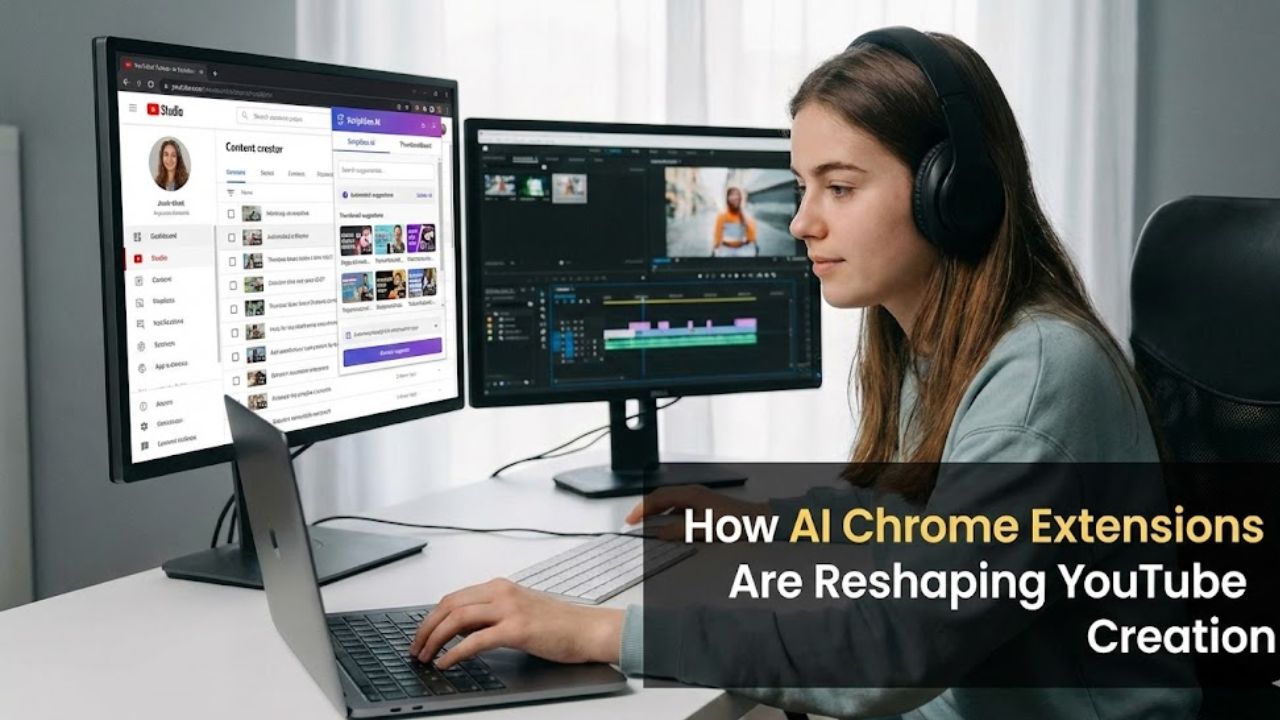
YouTube growth pressure feels different now.
Creators are expected to publish often stay relevant and compete with channels that look like production studios.
Many YouTubers hit the same wall. Ideas stall titles feel flat analytics confuse rather than guide and time disappears into repetitive work. The browser becomes the battleground where success or burnout is decided.
AI Chrome extensions for YouTubers emerged from this exact tension. These tools live where creators already work. They read context predict performance surface insight and remove friction. When used correctly they change how channels scale without stripping away creative voice.
Why Browser Level AI Matters for YouTube Workflows
Chrome extensions operate inside the moment of decision.
That detail separates them from standalone apps or dashboards.
Creation Happens in the Browser
Every YouTuber spends hours inside the browser. Research happens on YouTube. Titles are drafted in YouTube Studio. Competitors are analyzed in search results. Comments are moderated in tabs that never close.
AI extensions work inside those flows. They respond to what is on screen rather than forcing creators into separate tools. This alignment reduces friction and preserves momentum.
Context Awareness Improves Decisions
AI trained on isolated inputs produces generic output.
AI reading live YouTube data behaves differently.
Extensions can analyze ranking videos comments watch patterns and metadata in real time. That context allows suggestions that feel relevant rather than templated. Titles adapt to niche language. Keywords reflect actual viewer behavior.
Speed Protects Creative Energy
Creators lose energy through micro decisions.
Choosing phrasing. Checking analytics. Rewriting descriptions.
AI Chrome extensions reduce those drains. Small wins compound into hours saved weekly. Energy shifts back to ideation filming and audience connection.
Core Categories of AI Chrome Extensions for YouTubers
The AI ecosystem for YouTube did not grow randomly.
It evolved around predictable creator needs.
AI Title and Metadata Optimization Tools
Titles and descriptions determine discovery.
Even strong videos fail without clarity and relevance.
AI driven extensions analyze top ranking videos then suggest phrasing aligned with search behavior. These tools evaluate emotional triggers pacing length and keyword balance. Results feel tuned rather than stuffed.
Experienced creators notice something important.
The best AI does not replace instinct. It sharpens it. Titles remain human yet data informed.
Keyword and Topic Research Extensions
YouTube SEO lives at the intersection of intent and curiosity.
AI extensions scan search results trends and viewer patterns to surface ideas with demand.
Instead of chasing viral topics blindly creators gain visibility into sustainable interest curves. This matters for long term channels built on trust rather than spikes.
Over time patterns emerge.
Certain phrasing consistently outperforms. Certain topics fatigue audiences faster than expected. AI exposes those truths early.
Script Assistance and Idea Expansion Tools
Blank pages kill momentum.
AI script helpers reduce that friction.
These extensions generate outlines talking points and transitions based on niche context. Smart tools adapt tone to channel style rather than defaulting to generic narration.
Veteran creators use these tools as sparring partners. Ideas bounce faster. Scripts tighten. Recording sessions feel more focused.
Analytics Interpretation and Performance Insight
Numbers overwhelm many creators.
AI transforms raw analytics into narrative.
Extensions highlight anomalies retention drops and emerging signals. Instead of scanning dashboards creators see insight layered onto YouTube Studio itself.
Understanding why a video worked matters more than knowing that it did. AI bridges that gap.
Notable AI Chrome Extensions Used by Working YouTubers
Certain tools consistently appear in professional workflows.
They earned trust through accuracy and restraint.
TubeBuddy and Its AI Layers
TubeBuddy integrates deeply with YouTube Studio.
Its AI driven suggestions focus on optimization rather than automation.
Creators rely on it for title testing keyword scoring and bulk updates. The strength lies in visibility. Recommendations show impact before changes go live.
Experienced users appreciate that TubeBuddy exposes data sources. That transparency builds confidence and prevents blind reliance.
vidIQ for Competitive Intelligence
vidIQ excels at comparative insight.
Its AI scans competitor channels and surfaces opportunity gaps.
Creators see where rivals rank why videos spike and which tags drive visibility. The extension presents this inside search results making research fast and intuitive.
Used responsibly vidIQ becomes a strategy tool rather than a copying machine. It supports differentiation through awareness.
ChatGPT Based Extensions for Ideation
Several Chrome extensions embed conversational AI directly into YouTube pages.
These tools assist with scripting hook testing and comment responses.
Their value depends on prompt quality. Skilled creators treat AI as a junior editor. Ideas improve through iteration not acceptance.
The danger appears when creators outsource voice entirely. Authenticity erodes quickly. The strongest channels keep AI in a supporting role.
Practical Comparison of Common AI Chrome Extensions
The table below reflects real usage patterns observed across creator teams.
+———————-+—————————+————————+———————-+————————–+
| Extension Focus | Primary AI Function | Ideal Channel Size | Workflow Impact | Learning Curve |
+———————-+—————————+————————+———————-+————————–+
| Metadata Optimization| Title and description AI | Small to large | High | Low |
+———————-+—————————+————————+———————-+————————–+
| Keyword Research | Search intent analysis | Growing channels | Medium | Medium |
+———————-+—————————+————————+———————-+————————–+
| Script Assistance | Outline and pacing AI | Solo creators | Medium | Low |
+———————-+—————————+————————+———————-+————————–+
| Analytics Insight | Performance interpretation| Established channels | High | Medium |
+———————-+—————————+————————+———————-+————————–+
| Comment Management | Sentiment and reply AI | High volume channels | Medium | Low |
+———————-+—————————+————————+———————-+————————–+
How Experienced YouTubers Use AI Without Losing Authenticity
Tools amplify intent.
They do not define it.
AI as a Second Brain Not a Voice
Professional creators separate thinking from speaking.
AI supports analysis drafting and structure. Final delivery remains human.
Viewers sense when scripts sound generated. Retention drops. Trust erodes. Smart creators edit aggressively injecting personal phrasing cadence and opinion.
Pattern Recognition Over Prediction
AI excels at identifying patterns.
It struggles with cultural nuance and timing.
Creators use AI to see what worked historically then apply judgment to decide what fits now. That balance protects originality while benefiting from scale.
Guardrails Prevent Creative Drift
Without boundaries AI output converges toward sameness.
Creators set rules for tone vocabulary and structure.
Over time AI adapts to those constraints. Output improves. Editing time shrinks. The channel retains its identity.
Common Mistakes That Limit AI Extension Value
Adoption alone does not guarantee results.
Misuse often hides the upside.
Over Optimization Hurts Reach
Stuffed titles and forced keywords reduce click trust.
AI suggestions require curation.
Creators chasing scores forget viewers are human. The algorithm follows behavior not theory.
Ignoring Niche Specific Signals
Generic AI fails niche nuance.
Extensions trained broadly may miss context.
Successful creators test suggestions against audience feedback. Comments retention and session time matter more than tool metrics.
Tool Overload Creates Noise
Too many extensions compete for attention.
Decision fatigue increases.
Experienced teams limit stacks to a few high impact tools. Focus improves outcomes.
Ethical and Platform Considerations for AI Use
YouTube rewards viewer satisfaction.
Shortcuts rarely survive.
Transparency and Disclosure
Some creators disclose AI assistance.
Audiences appreciate honesty when content remains valuable.
Trust grows when AI supports clarity rather than deception.
Policy Alignment and Safety
Extensions must respect platform terms.
Unauthorized scraping or automation risks channel stability.
Creators vet tools carefully. Reputation matters more than convenience.
Long Term Brand Equity
AI shortcuts that inflate metrics temporarily often damage brands later.
Creators thinking long term prioritize substance.
Tools that enhance storytelling and insight strengthen channels sustainably.
FAQs About AI Chrome Extensions for YouTubers
Do AI Chrome extensions work for new YouTube channels
Yes when expectations stay realistic. New channels benefit most from keyword insight and title testing. Growth still depends on content quality and consistency.
Can AI extensions replace manual SEO work
They accelerate it. Human judgment remains essential. AI highlights opportunity while creators decide direction.
Are these tools safe for YouTube accounts
Reputable extensions follow platform guidelines. Risk appears with aggressive automation or unknown developers.
How many AI extensions should a creator use
Most professionals settle between two and four. More creates distraction rather than advantage.
Do AI generated titles hurt authenticity
Only when used verbatim. Edited thoughtfully they often improve clarity without harming voice.
Will YouTube penalize AI assisted content
The platform evaluates viewer satisfaction. AI assistance itself does not trigger penalties when content delivers value.
Why AI Chrome Extensions Will Remain Part of Creator Workflows
Content volume keeps rising.
Attention keeps fragmenting.
AI Chrome extensions for YouTubers succeed because they meet creators where work happens. They respect momentum. They surface insight at decision points.
The strongest creators use these tools quietly. Output improves. Stress lowers. Audiences receive clearer better paced content.
AI does not replace creativity.
It protects it from friction.
That shift explains why browser based AI has moved from novelty to infrastructure for serious YouTube channels.


