
Do the driving modes in the Cadillac Lyriq offer different ranges or battery usages?

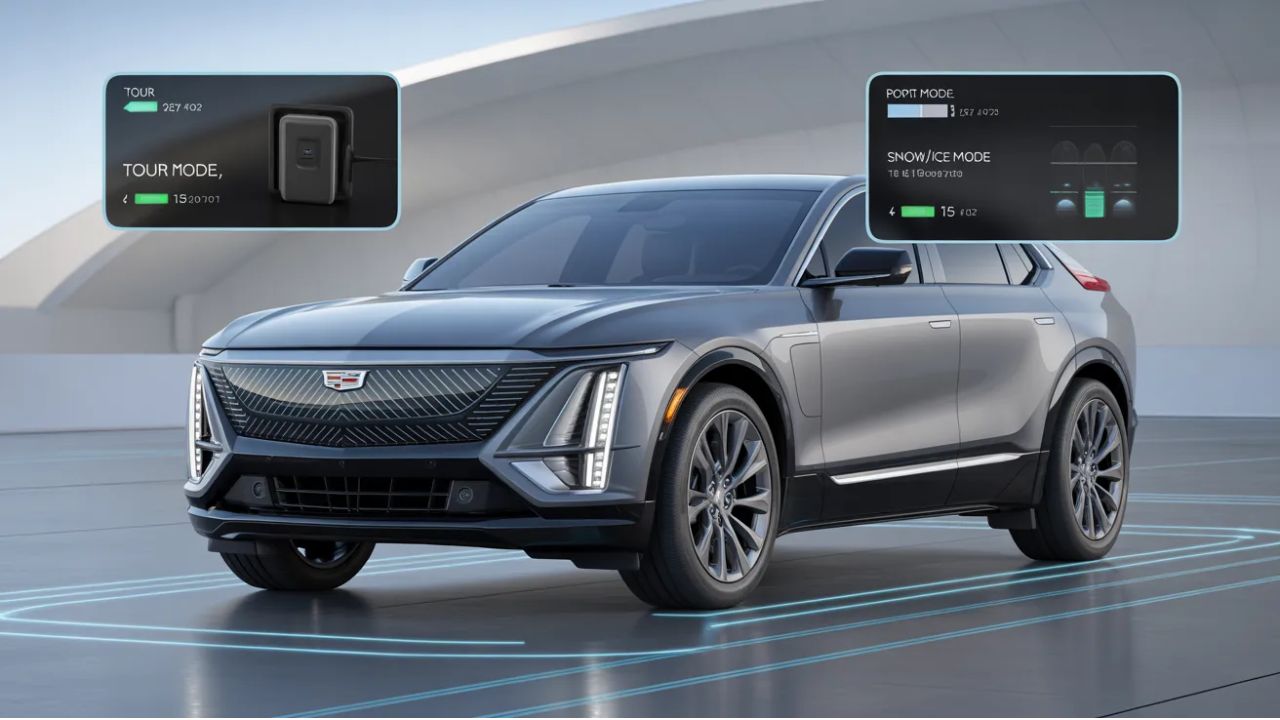
Range anxiety feels different when you are driving a premium electric SUV. Owners of the Cadillac Lyriq often ask a precise question rather than a vague one. Do the driving modes in the Cadillac Lyriq actually change range or battery usage, or are they simply altering steering feel and throttle response?
The short answer is yes, the driving modes can influence real world efficiency. The long answer is more nuanced. The effect depends on how the vehicle’s software reshapes throttle mapping, regenerative braking, traction control logic, and power delivery behavior.
Understanding this requires looking beyond marketing labels such as Tour, Sport, and Snow Ice. The real story sits inside the vehicle control algorithms, battery management strategy, and how the driver interacts with the pedal.
Understanding Cadillac Lyriq Driving Modes at a Technical Level
The Cadillac Lyriq is built on General Motors’ Ultium platform, which underpins several modern EVs. Unlike internal combustion vehicles, where driving modes may change gear shift points, electric vehicles rely heavily on software modulation.
Driving modes in the Lyriq do not physically alter battery chemistry or capacity. The lithium ion battery pack remains the same regardless of mode. What changes is how quickly and aggressively energy is drawn from it, how much regenerative braking is allowed, and how traction systems respond.
This distinction matters. Range is not only about battery size. It is about consumption patterns shaped by control logic and driver behavior.
Tour Mode and Efficiency Bias
Tour mode functions as the default balance setting. Throttle response is progressive rather than sharp. Power delivery feels smooth and linear. Steering is tuned for comfort.
From an efficiency standpoint, Tour mode is calibrated to reduce sudden torque spikes. Instant torque is a defining feature of electric motors, yet rapid acceleration draws high current from the battery pack. By smoothing pedal input mapping, Tour mode indirectly encourages moderate energy usage.
Regenerative braking behavior also remains moderate. The vehicle harvests energy during deceleration without creating abrupt drag. For many drivers, this setting yields the most predictable and stable consumption figures.
Sport Mode and Increased Energy Draw
Sport mode in the Lyriq sharpens throttle mapping. The same pedal input generates a more aggressive torque response. Steering weight increases. The vehicle feels more dynamic.
This sharper calibration leads to higher instantaneous current draw during acceleration. While the battery capacity does not shrink, the rate of discharge can increase. Rapid acceleration cycles reduce efficiency, particularly in city driving with frequent stop and go traffic.
High torque bursts generate more heat. The thermal management system works harder to maintain battery temperature within optimal parameters. That auxiliary energy usage, while small, contributes to overall consumption.
Snow Ice Mode and Traction Management
Snow Ice mode modifies torque distribution and throttle sensitivity to improve grip. Power delivery becomes gentler to prevent wheel slip. Stability control interventions are more proactive.
On dry pavement, this mode may actually produce slightly better efficiency than Sport mode because it dampens aggressive acceleration. On slippery roads, it prevents energy waste from wheel spin, which can otherwise drain battery reserves without forward motion.
The impact on range depends heavily on road conditions. On packed snow, maintaining steady traction often improves usable range compared to a more aggressive mode.
Does Driving Mode Change Official EPA Range?
The EPA range rating for the Cadillac Lyriq is determined under standardized testing conditions. These tests are not conducted across multiple driving modes in a comparative way for consumer labeling.
Manufacturers typically test in the default or normal driving mode. For the Lyriq, this generally aligns with Tour mode. The published range figures reflect controlled acceleration patterns and specific environmental conditions.
Switching to Sport mode will not officially change the EPA number displayed in brochures. Yet real world range can vary significantly depending on driving style. A driver consistently using Sport mode with rapid acceleration can experience noticeable reductions in miles per kilowatt hour.
Range in electric vehicles is dynamic. It reflects behavior, terrain, climate control usage, wheel size, and traffic patterns more than a simple mode selection.
Battery Usage Dynamics in Electric Vehicles
Electric vehicles such as the Cadillac Lyriq manage energy flow through sophisticated power electronics. The inverter converts DC battery energy into AC for the motors. The battery management system monitors voltage, temperature, and state of charge.
Driving modes influence how these systems prioritize performance versus efficiency. They do not change the underlying battery chemistry or total kilowatt hour capacity.
Aggressive acceleration in Sport mode increases peak current demand. High current flow leads to greater resistive losses within electrical components. Those losses manifest as heat. The cooling system must dissipate that heat, drawing small amounts of additional power.
Over time, repeated high load operation can slightly reduce efficiency compared to smoother energy delivery in Tour mode.
Regenerative Braking and Mode Interaction
Regenerative braking recovers kinetic energy and converts it back into stored electrical energy. In many EVs, including the Lyriq, regeneration intensity can be influenced by drive mode and driver settings.
A mode calibrated for performance may prioritize natural coasting feel over maximum regeneration. A more comfort oriented mode may emphasize smoother deceleration with consistent energy recovery.
The net difference in daily commuting can amount to several percentage points in efficiency, particularly in urban environments with frequent deceleration cycles.
Thermal Management and Energy Overhead
Battery temperature plays a central role in efficiency. Cold batteries reduce available power and range. Excessive heat triggers cooling systems that consume energy.
Sport mode tends to keep the powertrain in a higher readiness state. That may sustain slightly elevated thermal activity. Tour mode generally maintains lower peak output demands, reducing stress on thermal systems.
While the differences are not extreme, cumulative impact across long drives can affect total range.
Real World Range Variations by Driving Mode
Drivers often report variations of 5 to 15 percent in real world efficiency depending on how aggressively they use Sport mode. The variation is less about the mode itself and more about the behavior it encourages.
A restrained driver in Sport mode who accelerates gently may see little difference compared to Tour mode. An enthusiastic driver using rapid launches will observe measurable drops in miles per kilowatt hour.
The following table illustrates typical efficiency differences observed under mixed driving conditions.
| Driving Mode | Throttle Mapping | Average Efficiency mi per kWh | Estimated Range Impact | Ideal Usage Scenario |
|---|---|---|---|---|
| Tour | Smooth and progressive | 3.1 | Baseline reference | Daily commuting and highway cruising |
| Sport | Aggressive and sharp | 2.6 | Reduced by 8 to 15 percent | Dynamic driving and quick merging |
| Snow Ice | Soft and controlled | 3.0 | Slightly reduced or neutral | Low traction environments |
| Custom Eco | Tuned for mild response | 3.2 | Improved by up to 5 percent | Efficiency focused drivers |
| Highway Cruise | Moderate and steady | 3.3 | Stable long distance output | Consistent speed travel |
These figures are representative estimates under temperate conditions. Wind resistance, tire pressure, and climate control usage can alter results.
The Role of One Pedal Driving in Energy Recovery
The Cadillac Lyriq includes regenerative braking features that allow near one pedal driving behavior. This interacts with driving mode settings and driver input.
One pedal driving increases energy recovery during deceleration phases. Drivers who learn to modulate lift off timing can significantly improve urban efficiency.
In Tour mode with strong regenerative settings, stop and go traffic becomes an opportunity to recapture energy. In Sport mode, some drivers maintain speed longer before braking, which may reduce regeneration opportunities.
Behavioral adaptation often matters more than the mode itself. Experienced EV drivers develop a predictive driving style that maximizes coasting and regeneration.
Comparing Cadillac Lyriq With Other EVs
Within the broader electric vehicle landscape, the Lyriq competes with models such as the Tesla Model Y and the Ford Mustang Mach-E. All offer driving modes that adjust throttle sensitivity and steering feedback.
Across brands, the pattern remains consistent. Driving modes influence responsiveness and perceived performance more than official rated range.
The Ultium platform’s software centric design allows Cadillac engineers to fine tune torque curves and traction strategies. That flexibility creates subtle efficiency differences that can be felt in long term ownership.
Drivers transitioning from gasoline vehicles often underestimate how strongly pedal input affects energy consumption in EVs. Instant torque makes restraint a learned skill.
Psychological Impact of Driving Modes on Range
Driving modes alter perception as much as mechanics. Sport mode feels exhilarating. That sensation encourages more assertive driving behavior.
Tour mode communicates calmness and control. Drivers tend to adopt smoother acceleration patterns when the vehicle responds progressively.
Snow Ice mode increases caution. Drivers naturally apply gentler inputs.
These behavioral shifts directly influence battery usage. The vehicle’s software may only adjust response curves slightly, yet the human response amplifies the difference.
Climate Control, Wheel Size, and Mode Interplay
Range variations are rarely caused by driving mode alone. The Cadillac Lyriq’s large cabin climate system can draw significant energy during extreme heat or cold.
Larger wheels increase rolling resistance. Highway speeds amplify aerodynamic drag exponentially. When Sport mode encourages higher speeds, aerodynamic losses rise sharply.
Driving mode is one variable inside a broader efficiency ecosystem. Owners seeking maximum range must consider the entire driving environment.
Frequently Asked Questions
Is the Cadillac Lyriq’s EPA range tested in Sport mode?
EPA range testing is typically conducted in the default driving configuration, which aligns closely with Tour mode. Sport mode is not separately certified for range ratings, so any reduction in real world range comes from driving behavior rather than a revised official estimate.
Does Snow Ice mode reduce battery drain on winter roads?
On slippery surfaces, Snow Ice mode can prevent wheel spin and wasted energy. While cold temperatures still reduce battery efficiency, maintaining traction helps preserve usable range compared to aggressive throttle inputs.
Can driving mode affect long term battery health?
Battery degradation is influenced more by charging habits, temperature extremes, and sustained high loads than occasional mode selection. Frequent high current bursts in Sport mode may increase thermal stress slightly, though modern battery management systems regulate extremes carefully.
Is there an Eco mode in the Cadillac Lyriq?
The Lyriq allows customization through driver settings that effectively create an efficiency focused configuration. By softening throttle response and maximizing regenerative braking, drivers can prioritize range without sacrificing drivability.
How much range can be lost in Sport mode?
Range loss varies widely. In mixed city driving with aggressive acceleration, reductions of up to 10 to 15 percent have been observed. Conservative use of Sport mode may produce negligible difference.
Does one pedal driving improve range regardless of mode?
Strong regenerative braking improves efficiency in urban conditions. When combined with smooth throttle application, it can offset some of the extra energy used in more performance oriented modes.
The Reality of Driving Modes and Electric Range
Driving modes in the Cadillac Lyriq do influence real world range and battery usage, though not through altering battery size or chemistry. They shape how energy flows from the battery to the motors and back through regenerative braking.
The difference is subtle at the software level and substantial at the behavioral level. Aggressive throttle mapping encourages higher energy draw. Softer calibrations promote efficiency.
Owners who understand these dynamics gain control over their vehicle’s range outcomes. Electric vehicles reward anticipation, smooth inputs, and strategic regeneration.
The Cadillac Lyriq blends luxury, technology, and electric performance. Its driving modes are not mere marketing labels. They are behavioral frameworks embedded in software, capable of shifting energy consumption patterns across every mile traveled.


