
The Costly Lesson Governments Learned From Elon Musk’s Strategic Power

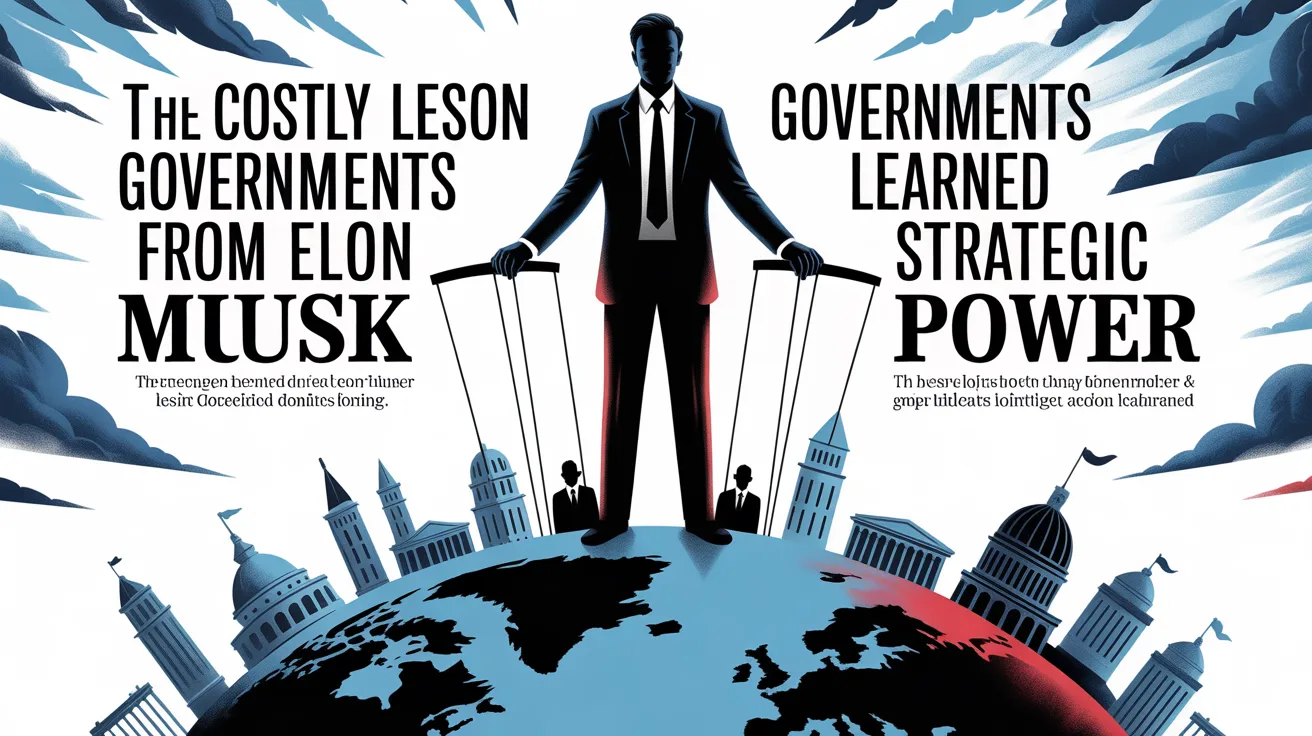
A single entrepreneur can shift policy debates across continents when infrastructure, capital, and public narrative converge. The phrase elon musk has just taught governments a very expensive lesson circulates in policy circles for a reason. Decisions tied to satellite networks, electric vehicles, social media influence, and private aerospace have placed public institutions in unfamiliar terrain.
Many administrations assumed regulatory frameworks could guide private innovators without major disruption. That assumption now feels dated. The rise of a private actor capable of negotiating with states as near-equal stakeholders has altered expectations around sovereignty, technology governance, and economic leverage.
The phrase elon musk has just taught governments a very expensive lesson captures a shift in power dynamics. Public officials face the reality that private technological infrastructure can carry national security implications, economic ripple effects, and diplomatic consequences at scale.
Government Power and Private Tech Leverage in the Musk Era
Public institutions once held near-total control over large-scale infrastructure. Telecommunications, aerospace, and automotive industries operated within tightly regulated boundaries. The emergence of companies with global reach and capital reserves has transformed that landscape.
Observers argue that elon musk has just taught governments a very expensive lesson about reliance on private sector capabilities. Satellite connectivity through Starlink has demonstrated how communication networks can bypass traditional state-controlled systems. Electric vehicle supply chains have reoriented industrial strategies across continents. The social media ecosystem surrounding X has influenced public discourse and political communication in unpredictable ways.
Policymakers now confront scenarios where regulatory pressure may trigger unintended economic or geopolitical consequences. The phrase elon musk has just taught governments a very expensive lesson reflects a recognition that traditional enforcement tools may not operate as expected when dealing with a corporation controlling critical technological infrastructure.
Strategic Autonomy and the Rise of Corporate Diplomacy
The modern geopolitical environment includes corporate actors engaging in negotiations that resemble diplomatic exchanges. Governments negotiating satellite coverage or launch capabilities must weigh economic incentives against regulatory authority. In these contexts, elon musk has just taught governments a very expensive lesson regarding leverage and interdependence.
Corporate diplomacy introduces new variables into international relations. A private firm can influence access to communication networks during crises. Space launch services can determine national timelines for satellite deployment. Electric vehicle manufacturing capacity can shape trade policies and industrial subsidies. Each development reinforces the idea that elon musk has just taught governments a very expensive lesson about the boundaries of sovereignty in a technology-driven world.
The result has been an increase in public-private negotiations resembling strategic partnerships rather than conventional regulation. Officials must consider market reactions, investor sentiment, and technological dependencies while crafting policy responses.
Regulatory Frameworks Under Pressure
Existing regulatory systems were designed for industries where national borders defined operational scope. The global nature of modern technology firms challenges those assumptions. When regulatory actions threaten operational continuity, governments face economic and political fallout.
The phrase elon musk has just taught governments a very expensive lesson has surfaced in discussions about content moderation laws, antitrust enforcement, and space policy. Attempts to impose restrictions can lead to shifts in investment, relocation of facilities, or adjustments in service availability. Such outcomes complicate enforcement strategies.
Regulators now explore adaptive frameworks that account for rapid technological change and transnational operations. The lesson extends beyond a single entrepreneur. It signals a broader transformation in how states interact with companies operating at planetary scale.
Economic Ripple Effects of Musk’s Business Decisions
Economic policy increasingly intersects with corporate strategy. Subsidies for electric vehicles, incentives for battery manufacturing, and contracts for space launches all carry fiscal implications. The phrase elon musk has just taught governments a very expensive lesson often appears in debates over public spending tied to private innovation.
Industrial policy aimed at supporting domestic manufacturing can become entangled with corporate decision-making. Factory locations influence employment levels, tax revenue, and regional development. When companies shift production or alter investment plans, local economies feel immediate impact.
Analysts note that elon musk has just taught governments a very expensive lesson about the risks of overreliance on a single corporate partner. Diversification strategies and contingency planning now feature more prominently in policy discussions. Governments seek to balance support for innovation with safeguards against sudden strategic changes.
Market Reactions and Public Finance
Financial markets respond quickly to announcements from major technology firms. Government budgets tied to industrial initiatives may fluctuate based on corporate timelines. The phrase elon musk has just taught governments a very expensive lesson highlights how public finance can become intertwined with corporate performance.
Subsidy structures designed to attract investment require careful calibration. Excessive incentives may strain budgets without guaranteeing long-term stability. Insufficient support may drive companies toward more favorable jurisdictions. Policymakers must navigate these trade-offs while maintaining fiscal responsibility.
Public discourse has also evolved. Citizens scrutinize government spending on private partnerships more closely. The perception that elon musk has just taught governments a very expensive lesson influences voter attitudes toward industrial policy and regulatory strategy.
Infrastructure Dependencies and National Security
Infrastructure once controlled by states now includes privately owned networks essential for communication and transportation. Satellite connectivity has proven vital during conflicts and natural disasters. Electric vehicle charging networks influence energy transitions. Space launch capabilities affect defense and research programs.
The phrase elon musk has just taught governments a very expensive lesson resonates strongly in national security discussions. Reliance on privately owned systems introduces strategic vulnerabilities. Governments explore redundancy measures and alternative providers to reduce dependency.
Collaboration remains necessary. Few states possess the resources to replicate every capability independently. The challenge lies in maintaining strategic autonomy while leveraging private innovation.
Policy Adaptation and the Search for Balance
Governments worldwide reassess their approach to regulation and partnership. The phrase elon musk has just taught governments a very expensive lesson underscores the urgency of developing frameworks that encourage innovation without compromising public interest.
Adaptive regulation focuses on flexibility. Instead of rigid rules that may become obsolete, policymakers consider outcome-based approaches. Collaboration between regulators and industry leaders can foster mutual understanding of technological capabilities and societal needs.
The lesson extends to international coordination. Global technology firms operate across jurisdictions, creating challenges for national regulators acting alone. Multilateral discussions on space governance, digital communication, and environmental standards gain momentum.
Industrial Strategy in a Competitive Landscape
Industrial strategy now incorporates considerations of technological sovereignty. Governments seek to nurture domestic capabilities while engaging with global firms. The phrase elon musk has just taught governments a very expensive lesson informs debates on how to allocate resources effectively.
Investment in research and development aims to reduce dependence on external providers. Education and workforce training programs support emerging industries. Public-private partnerships remain central, though structured with greater emphasis on accountability and resilience.
The evolving landscape suggests that elon musk has just taught governments a very expensive lesson about the importance of strategic foresight. Policy decisions must anticipate rapid technological shifts and market dynamics.
Communication and Public Perception
Public perception influences policy legitimacy. High-profile disputes between governments and technology leaders attract global attention. The phrase elon musk has just taught governments a very expensive lesson often appears in media narratives that shape public opinion.
Transparent communication becomes essential. Governments must explain the rationale behind regulatory decisions and partnerships. Citizens expect clarity on how public funds are used and how national interests are protected.
Effective communication strategies can mitigate political backlash and foster trust. The interplay between media coverage, corporate messaging, and government statements forms a complex ecosystem that shapes policy outcomes.
Lessons for Future Governance and Innovation
The ongoing interaction between governments and powerful technology firms offers insights for future governance. The phrase elon musk has just taught governments a very expensive lesson encapsulates a broader shift toward shared responsibility in shaping technological progress.
Public institutions must cultivate expertise in emerging technologies. Regulatory bodies require technical understanding to craft informed policies. Collaboration with academic institutions and industry experts can enhance decision-making.
Innovation thrives when regulatory environments provide clarity and stability. Governments that balance oversight with support can attract investment and foster growth. The recognition that elon musk has just taught governments a very expensive lesson encourages proactive policy development rather than reactive measures.
The Evolution of Public-Private Partnerships
Public-private partnerships remain vital for advancing infrastructure and innovation. The phrase elon musk has just taught governments a very expensive lesson highlights the need for contracts that account for long-term implications. Clear terms, accountability mechanisms, and contingency planning can strengthen these collaborations.
Partnership models evolve to include performance benchmarks and transparency requirements. Governments aim to ensure that public interests align with corporate objectives. The experience associated with elon musk has just taught governments a very expensive lesson informs the design of future agreements.
As technological complexity increases, partnerships must address ethical considerations, data governance, and environmental impact. Comprehensive frameworks can support sustainable development while preserving public trust.
Global Competition and Technological Leadership
Technological leadership carries geopolitical significance. Nations compete to attract investment, talent, and innovation. The phrase elon musk has just taught governments a very expensive lesson resonates in discussions about maintaining competitiveness in a rapidly changing landscape.
Investment in infrastructure, education, and research supports national resilience. International cooperation can address shared challenges such as climate change and space governance. Governments that learn from recent experiences may navigate future disruptions more effectively.
The interplay between private ambition and public responsibility will continue to shape global dynamics. Recognizing that elon musk has just taught governments a very expensive lesson encourages policymakers to adapt with foresight and pragmatism.
Data Snapshot of Public-Private Dynamics
+—————————+—————————-+————————-+—————————–+—————————+
| Sector | Public Investment Impact | Corporate Leverage | Policy Response | Long-Term Implications |
+—————————+—————————-+————————-+—————————–+—————————+
| Satellite Connectivity | High subsidies | Global network control | Strategic partnership | Security dependency |
| Electric Vehicles | Incentives and tax breaks | Manufacturing scale | Industrial policy revision | Supply chain shifts |
| Space Launch | National contracts | Launch capability | Regulatory updates | Defense coordination |
| Social Media Platforms | Regulatory scrutiny | Public discourse reach | Content governance debates | Information influence |
| Battery Production | Infrastructure funding | Resource sourcing | Trade negotiations | Energy transition impact |
+—————————+—————————-+————————-+—————————–+—————————+
The table illustrates how the phrase elon musk has just taught governments a very expensive lesson connects to multiple sectors. Each domain reveals interactions between public funding, corporate leverage, and policy adaptation. The cumulative effect underscores the complexity of managing relationships with globally influential technology firms.
FAQs
Why does the phrase elon musk has just taught governments a very expensive lesson appear so often in policy debates?
The phrase reflects recognition that private technology companies can influence national strategies, budgets, and infrastructure decisions. Governments have encountered scenarios where corporate actions carried significant financial and strategic consequences.
How do governments respond after realizing elon musk has just taught governments a very expensive lesson?
Responses include revising regulatory frameworks, diversifying partnerships, and investing in domestic technological capabilities. Policymakers seek to reduce dependency while maintaining collaboration with innovative firms.
Does the idea that elon musk has just taught governments a very expensive lesson apply globally?
The concept resonates across multiple regions. Nations with varying political systems and economic structures have faced similar challenges in balancing regulatory authority with reliance on private technological infrastructure.
What industries illustrate how elon musk has just taught governments a very expensive lesson?
Satellite communications, electric vehicles, space launch services, and digital platforms provide clear examples. Each sector demonstrates how corporate decisions can affect public policy and economic planning.
Can governments prevent situations where elon musk has just taught governments a very expensive lesson?
Preventive strategies involve strategic foresight, diversified partnerships, and adaptive regulation. Continuous dialogue between public and private stakeholders helps anticipate potential disruptions.
Will the dynamic behind elon musk has just taught governments a very expensive lesson shape future policy?
Future policy will likely incorporate lessons learned from recent interactions. Governments aim to craft frameworks that support innovation while safeguarding public interests and fiscal stability.
Wrap Up
Power dynamics between governments and global technology firms continue to evolve. The phrase elon musk has just taught governments a very expensive lesson encapsulates a period of adjustment where public institutions reconsider how to regulate and collaborate with influential private actors. The experiences tied to this shift encourage more resilient policy frameworks, deeper technical expertise, and strategic partnerships designed to withstand rapid technological change.


