
Best Reverse Image Search Techniques Explained

Introduction
You found an image online and something feels off. Maybe it is a product photo that looks too polished. Maybe it is a profile picture that seems stolen. Maybe it is a news image that could be recycled from years ago. The frustration builds because a standard keyword search gives nothing useful. That is where reverse image search techniques shift the balance.
Most people drag an image into a search engine and hope for a match. Professionals take a different route. They understand image indexing, metadata traces, compression artifacts, and cross platform discrepancies. They know that one tool rarely tells the whole story. The truth hides in patterns, duplicates, and subtle visual fingerprints.
Reverse image search is no longer a novelty feature. It is a verification discipline used in journalism, ecommerce protection, cybersecurity investigations, and digital forensics. When executed with precision, it reveals origin, context, ownership, and manipulation history. This article unpacks those techniques with depth and clarity.
Understanding the Mechanics Behind Reverse Image Search Techniques
Search engines do not see images the way humans do. They translate pixels into mathematical signatures. These signatures capture shape, color distribution, edges, and texture patterns. Machine learning models then compare those signatures against vast indexed databases.
A reverse image search begins by generating a perceptual hash. This hash is not identical to a cryptographic hash. It tolerates resizing and minor edits. It focuses on structural similarity rather than exact duplication. That distinction matters when tracking reposted or slightly altered images.
Advanced systems apply convolutional neural networks to extract feature vectors. These vectors encode deeper semantic attributes. A beach scene with palm trees may match similar scenes even if the image resolution differs. This semantic mapping enables broader discovery beyond exact matches.
Experienced investigators understand that different search engines prioritize different signals. Some rely heavily on visual similarity. Others weigh surrounding text context and alt tags. Knowing how each platform ranks results improves accuracy.
Core Tools That Power Image Investigation
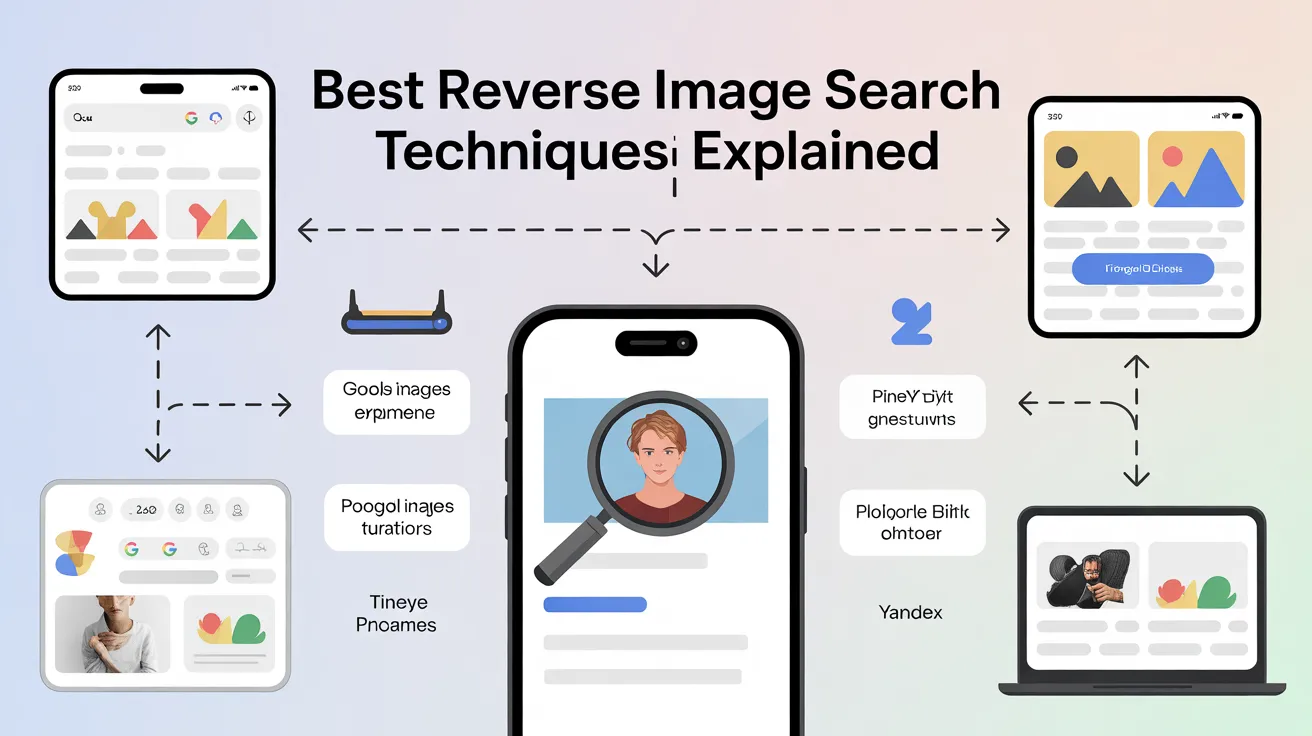
Google Images remains the most recognized platform for reverse image search techniques. Its visual search algorithm is robust and frequently updated. It excels at identifying widely circulated images and ecommerce product duplicates. It also surfaces visually similar alternatives.
TinEye operates differently. It emphasizes exact or near exact matches and provides sorting by oldest indexed instance. This chronological sorting can expose the earliest known publication. For journalists tracing misinformation, that feature becomes invaluable.
Bing Visual Search integrates object recognition. It allows users to isolate a specific section of an image. Cropping out background clutter refines results. That small adjustment often changes the outcome dramatically.
Yandex has gained a reputation for strong facial recognition matching. It frequently identifies profile images across social networks that other engines miss. Investigators tracking fake personas often rely on it.
Seasoned researchers rarely depend on a single platform. They cross reference across multiple engines. Each tool acts as a lens with different strengths. The overlap between them forms stronger evidence.
Advanced Reverse Image Search Techniques for Deeper Accuracy
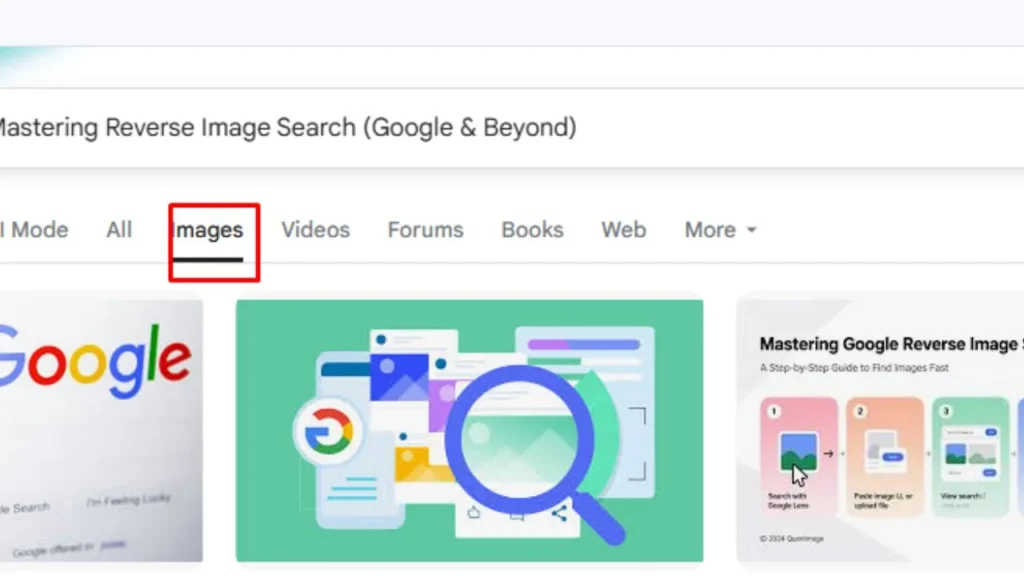
Uploading the full image is only the starting point. Cropping is a powerful refinement strategy. By isolating a face, a logo, a building, or a landmark, the search engine focuses on the core visual element. Background noise fades away.
Image rotation can affect indexing. Some databases store images in their original orientation. Rotating an image slightly before uploading may surface results that were missed in a standard query. This tactic works surprisingly often with archived content.
Resolution changes can influence search output. Downscaling an image compresses details. Upscaling through interpolation introduces subtle smoothing. Testing both variations sometimes reveals hidden matches in poorly indexed repositories.
Color filtering also alters outcomes. Converting an image to grayscale emphasizes structure over hue. This can help when the original has heavy color grading. Investigators testing for manipulation often compare grayscale versions to identify inconsistencies.
Screenshot searching adds another layer. When a social media post contains embedded text, searching the screenshot may return the same post archived elsewhere. Context emerges through repetition.
Metadata and EXIF Data as Hidden Clues
Reverse image search techniques extend beyond visual similarity. Embedded metadata often carries valuable information. Exchangeable Image File Format data may include camera model, timestamp, GPS coordinates, and software used for editing.
Many platforms strip EXIF data upon upload. That does not mean metadata is irrelevant. If the original file is accessible, extracting metadata can validate authenticity. A photo claiming to depict a recent event might contain a timestamp from years earlier.
Editing software leaves traces. Programs like Photoshop embed signatures in metadata. Even when altered minimally, the software fingerprint can expose image manipulation.
Digital forensics experts cross check metadata with reverse search results. If an image appears on a website before its supposed creation date, something is wrong. Consistency between metadata and indexed history builds credibility.
Recognizing Manipulated and AI Generated Images
The rise of generative AI has complicated visual verification. Reverse image search techniques must now account for synthetic images. AI generated visuals may not have older indexed instances. That absence alone is not proof but it raises questions.
Visual artifacts reveal clues. Look for inconsistent lighting directions, unnatural hand structures, or repetitive background textures. Cropping specific sections and searching them independently may expose stock elements used in the composition.
Compression inconsistencies are another indicator. When a section of an image has different noise patterns than the rest, it may have been pasted from another source. Searching that fragment sometimes identifies the donor image.
For deepfake detection, facial landmarks play a role. Subtle asymmetry around eyes or teeth can hint at manipulation. Reverse image search combined with forensic inspection creates a layered verification approach.
Reverse Image Search Techniques in Journalism and OSINT
Open source intelligence analysts treat image verification as a disciplined workflow. They begin with contextual analysis. Where was the image shared. Who shared it first. What narrative accompanies it.
Next comes reverse search across multiple engines. The earliest indexed result often leads to the original uploader. Time stamps matter. Misinformation often relies on recycled imagery.
Geolocation analysis follows. Visible landmarks, street signs, architecture, and weather patterns offer clues. Searching cropped segments of buildings can reveal their location. Satellite imagery cross referencing confirms accuracy.
Journalists also examine shadows. The angle of sunlight can approximate time of day. When paired with claimed timestamps, discrepancies become clear. Reverse image search techniques form only one layer of a broader verification framework.
Ecommerce Fraud and Intellectual Property Protection
Brands rely heavily on reverse image search techniques to detect counterfeit listings. Unauthorized sellers often reuse official product photos. By scanning marketplaces with image queries, companies identify infringing pages.
Copyright holders track stolen artwork the same way. Artists upload their images to search engines and review matches. When duplicates appear without permission, they gather evidence for takedown requests.
Drop shipping scams frequently recycle supplier images. Reverse searching a product image may reveal it listed across dozens of sites at varying prices. That pattern signals reselling rather than original manufacturing.
Image tracking protects reputation. When a company logo appears in misleading contexts, reverse search uncovers the source. Early detection limits damage.
Privacy Risks and Ethical Boundaries
Reverse image search techniques can expose identity. A profile photo uploaded to a dating platform may trace back to a public social account. This capability raises privacy concerns.
Responsible use matters. Journalists and investigators operate under ethical standards. They verify public interest before revealing identities. Random searches without context risk misuse.
Platforms continue refining privacy controls. Some images remain unindexed intentionally. Dark web content may not appear in mainstream search engines. Understanding those boundaries prevents false assumptions.
Ethical investigation requires transparency. If image findings are published, the methodology should be explained. Credibility depends on traceable reasoning.
Optimizing Your Own Images to Control Search Visibility
Reverse image search works both ways. Creators can shape how their images appear in search results. Unique file names improve indexing accuracy. Descriptive alt text strengthens contextual relevance.
Watermarking discourages theft while preserving brand identity. Visible branding ensures attribution even when images are reshared. Invisible digital watermarks add another security layer.
Structured data markup on websites helps search engines understand image context. When paired with clear captions, images become easier to trace back to their original source.
Monitoring image performance through periodic reverse searches helps creators track distribution. Awareness leads to proactive control.
The Future of Reverse Image Search Techniques
Artificial intelligence continues refining image recognition. Multimodal search blends text and image queries. A user may upload a photo and add descriptive keywords. The search engine interprets both signals simultaneously.
Three dimensional object recognition is advancing. Instead of matching flat images only, algorithms detect spatial structure. This will expand detection of product variations and architectural similarities.
Privacy regulations may shape indexing policies. Stricter data governance could limit searchable facial databases. Transparency around algorithmic decisions will gain importance.
The discipline of reverse image search will evolve alongside misinformation tactics. As synthetic media grows more sophisticated, verification methods must grow sharper. Adaptation defines expertise in this field.
FAQs
What makes reverse image search techniques different from regular image search
A regular image search begins with text keywords. Reverse image search starts with the image itself. The system analyzes visual data and compares it to indexed images across the web.
Can reverse image search find the original photographer
It can identify the earliest indexed instance online. That may lead to the original source. Direct authorship confirmation may still require further investigation.
Why do some images return no results
The image may be newly uploaded or restricted from indexing. It could exist only in private databases. AI generated images with no prior distribution may also yield limited matches.
Is reverse image search accurate for facial recognition
Accuracy varies by platform. Some engines perform strong facial matching. Privacy restrictions and regional indexing policies affect results.
How can I check if an image was edited
Compare cropped sections through reverse search. Inspect metadata if available. Look for inconsistent lighting or compression artifacts. Combining methods improves reliability.
Are there legal risks when using reverse image search
Searching publicly available images is legal in most regions. Publishing findings without context may raise privacy or defamation concerns. Responsible use remains critical.
Conclusion
Reverse image search techniques represent far more than a convenient tool. They form a structured investigative practice grounded in pattern recognition, contextual analysis, and digital forensics. From verifying breaking news to protecting intellectual property, these methods reveal the hidden journeys of images across the web.
True expertise lies in layered analysis. Cropping, cross engine comparison, metadata inspection, and contextual reasoning create a reliable framework. As visual content multiplies and synthetic media grows more convincing, disciplined verification becomes indispensable.
Mastery of reverse image search techniques demands curiosity and rigor. When applied with ethical judgment and technical precision, they transform uncertainty into clarity and protect the integrity of digital information.


